Refrigeration Compressors

Troubleshooting Sabroe Compressors – SMC & TSMC Series, MK4 ModelsPermitted Applications for Sabroe CompressorsUsing a Sabroe compressor outside its intended design may result in operator injuries and technical damage to the system. The compressor must only be used for the following purposes. In addition, before carrying out any service work, please read the Ammonia First Aid guidelines.As a refrigeration compressor, operated only within the permissible RPM limits specified in Sabroe Refrigeration references.SMC 100 and TSMC 100 compressors with code S and L are designed exclusively for use with refrigerants R717, R22, R134a, R407C, R404A, and R507.SMC 100 and TSMC 100 compressors with code E are designed exclusively for use with refrigerant R717 (Ammonia).SMC 100 and TSMC 100 compressors with codes S, L, and E must only operate at a maximum design discharge pressure of 25 bar (375 psi).The compressor must not be used for evacuating air or moisture from a refrigeration system.The compressor must not be used for pressure testing of a refrigeration system.The compressor must not be used as an air compressor.Service and Maintenance of Sabroe Compressor UnitsDaily Service of Sabroe CompressorsDaily service mainly consists of visual inspection. Once you are familiar with the normal sounds and vibrations of the unit, compare its daily performance with previous observations. Match the operating data and compressor performance diagrams for consistency.Inspect the compressor unit and ensure noise and vibration levels are within normal limits.Record all operating values in a logbook. Compare daily readings with the previous day to identify any trends. If necessary, create a report for closer analysis.Check the oil level in the oil separator (for screw compressors).Check the oil level in the compressor (for reciprocating compressors).Measure and record the oil pressure.Check the refrigerant charge.Inspect for leaks and eliminate them if found. Leaks may involve oil, refrigerant, cooling water, or brine circuits.WarningDaily operation and routine maintenance are normally performed by operators. Any additional servicing that requires system analysis and refrigeration engineering must only be carried out by authorized personnel.Periodic Service of Sabroe CompressorsLubrication of the motor and other routine maintenance tasks are typically scheduled based on operating hours, although they may be required earlier if necessary.Overhaul and Major Service of Sabroe CompressorsFor major overhauls and complete rebuilds of Sabroe compressors, the standard procedure is to contact the compressor supplier.Use of the Sabroe Compressor Troubleshooting TableIn the table below, each possible fault is listed with a brief fault description in the “Fault Description” column, the code for the possible cause in the “Cause Code” column, and the fault code in the “Fault Code” column.
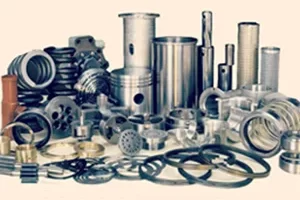
Refrigeration Compressor Spare PartsEvery refrigeration system component has a lifespan, but proper operation and periodic maintenance can greatly extend it. Atlas Refrigeration offers a comprehensive selection of spare parts for refrigeration compressors, produced by OEMs of reputable brands. If a specific part is unavailable, Atlas Refrigeration can quickly import it based on customer requirements.Compressor Spare Parts and OverhaulAfter an expert assesses the defective compressor at your site, the required services and spare parts are estimated. Once prepared, compressor mechanics are dispatched for on-site repairs under expert supervision, ensuring precision. All work follows the manufacturer’s technical guidelines, with professional measurements and settings. Overhauls are often done in stages to allow continued operation during repairs.Compressor spare parts include various components that can be replaced or repaired. For reciprocating compressors, these parts may include crankshafts, pistons, connecting rods, and valves, while for screw compressors, they may include rotors, slide valves, and transmitters.Screw Compressor Spare PartsScrew compressor spare parts include:– Rotors: Male rotor and female rotor– Bearings– Oil pump– Seals: Coal seal, complete seal– Washers and O-rings– Oil cooler– Capacity control components: Slide valve, solenoid valve– Sensors: Pressure and temperature transmitters– Filters: Oil filter, suction filter, coalescer oil separator filterThese parts are essential for the efficient operation and maintenance of screw compressors.Piston Compressor Spare PartsPiston compressor spare parts include:– Crankshaft– Bearings: Main Bearing, Connecting Rod Bearing– Oil pump– Seals: Coal seal, full seal– Washers and O-rings– Connecting rod and piston– Rings: Oil ring, compressor ring– Valves: Exhaust valve, suction valve, valve plate (exhaust and suction)– Cylinder components: Cylinder bushing, gas pin, gas pin bushing, cylinder safety spring– Filters: Oil filter, suction filterAtlas Refrigeration, with its experienced technical team and knowledge of leading compressor brands, offers major repairs for ammonia and freon piston and screw compressors at your location.
Refcamp compressorRefcamp was founded in 1991 as a refrigeration compressor manufacturer in Italy. Refcamp’s production facilities are equipped with advanced technology to ensure accuracy and efficiency. Refcamp (Refcomp Compressor) specializes in the production of screw and reciprocating refrigeration compressors that cover a variety of commercial and industrial refrigeration and air conditioning applications. Today, Refcamp compressors are known for their energy efficiency, good performance and economical price, .which makes it a reliable choiceRefcom compressor typesRefcamp only produces semi-hermetic or semi-hermetic refrigeration compressors, which means that the compressor and the electric motor are coupled together in a shell with the ability to open. Refcamp compressors, on the other hand, can be divided into two types of piston compressors and screw compressors.Refcomp hermetic toxic piston compressorsRefcamp hermetic piston compressors are engineered and manufactured with modern technology and high quality control. These compressors are suitable for various applications including commercial refrigeration and air conditioning. Refcamp piston compressors have an up-to-date design that provides long-term durability and easy maintenance.Refcamp piston compressors are SP and ORC series. Also, Refcamp’s SB series two-stage piston compressor is suitable for use at low temperatures of about -40 degrees Celsius for the freezing tunnel.Very low noise and vibrationHigh cooling capacity with minimal energy consumptionAbility to work with common refrigerants such as R-22, R134a, R404A, R407C, R507ARefcamp hermetic piston compressors are suitable for building cold storage, industrial ice maker, ice bank, air conditioning and other refrigeration systems.Refcomp screw compressorsRefrigerating screw compressors are designed and manufactured for high capacity refrigeration applications typically used in large industrial and commercial systems. Refcamp’s screw compressor has high efficiency and can manage high thermal loads in the temperature range of +40/45 degrees Celsius in one step. Advanced screw technology provides consistent performance, reduced vibration and noise levels, as well as fewer moving parts, making them ideal for harsh environments. Refcamp screw compressors are SRC and SW series.
Copeland Compressors and Emerson Climate Company HistoryCopeland Compressors, a prominent brand under Emerson Climate Technologies, is renowned for its innovation, efficiency, and reliability in the refrigeration and air conditioning industry. Copeland offers a wide range of products, including scroll and reciprocating compressors, catering to various residential, commercial, and industrial applications. These compressors are engineered to enhance energy efficiency, comply with stringent environmental standards, and deliver robust performance under diverse operating conditions. Advanced Copeland technologies, such as digital modulation and variable speed drives, ensure precise temperature control and optimal system performance, making them an ideal choice for refrigeration and air conditioning systems.Since its inception in 1890, Emerson has evolved from a regional manufacturer in America to a global leader in the industry. With over a century of experience in producing refrigeration solutions and products, Emerson acquired the German DWM company and now produces hermetic and semi-hermetic compressors under its own name. In the following sections, we will delve deeper into Copeland compressors. Types of Copeland CompressorsCopeland Emerson offers a variety of compressor types, including scroll compressors, standard semi-hermetic piston compressors, and Discus semi-hermetic piston compressors. Each type is meticulously designed and constructed to ensure optimal performance and high energy efficiency in refrigeration and air conditioning applications.Standard Semi-Hermetic Piston CompressorsCopeland’s standard semi-hermetic piston compressors, including the 2D, 3D, 4D, and 6D series, are renowned for their durability, efficiency, and ease of maintenance. These compressors cater to a wide range of refrigeration and air conditioning applications, offering reliable performance and flexibility with the capability to work with multiple refrigerants. Discus Semi-Hermetic Piston CompressorsCopeland Discus™ compressors are renowned for their exceptional performance and durability, particularly in industrial refrigeration applications. These compressors are designed to achieve a lower temperature range and reduce energy consumption, ensuring extended compressor service life and enhanced operational efficiency. Scroll CompressorsCopeland Scroll™ compressors are extensively used in residential and commercial air conditioning projects because of their high efficiency, reliability, and quiet operation. Featuring advanced technology and a robust design, these compressors deliver exceptional performanceCharacteristics of Copeland Piston Compressors– Very low noise and vibration– Equipped with an integrated oil pump– Two motor size options according to the application– Highest cooling capacity compared to other similar brands– Capable of operating in a wide range of high, medium, and low temperatures– Capacity control via cylinder blocking or inverter from 25 to 60 Hz frequency– Compatible with common refrigerants such as R-22, R134a, R404A, R407C, R507A Characteristics of Copeland Scroll Compressors– Economical and reliable alternative to inverters– Option to add a silencer for silent operation up to 10 dB– Maintains temperature stability in the evaporator with accurate capacity control– Precise control of suction pressure and implementation of optimal consumption principles– Compatible with common refrigerants such as R-22, R134a, R404A, R407C, R507A– Continuous capacity adjustment from 10% to 100% for optimal capacity and load management How to Choose a Copeland CompressorTo select a Copeland compressor, calculate and choose the appropriate power using the following data along with the Copeland compressor catalog:– Refrigeration capacity (kilowatts)– Evaporator temperature (degrees Celsius)– Condenser temperature (degrees Celsius)– Refrigerant typeEvaluate the required cooling capacity, the type of application (residential, commercial, or industrial), and the compatible refrigerant to choose the right Copeland compressor model. Consider energy efficiency ratings to reduce operating costs and assess operational and environmental conditions. Ensure the compressor meets the physical limitations of your system and is easy to maintain. It’s strongly recommended to consult an air conditioning and refrigeration specialist before purchasing to help you choose the most suitable Copeland compressor model.
Introduction to Bitzer Compressor and Company HistoryGermany’s Bitzer Company is a leading manufacturer specializing in refrigeration and air conditioning compressors, renowned for its extensive product line and expertise in the global refrigeration industry. Established in 1934, Bitzer has solidified its reputation as a dependable compressor manufacturer worldwide. The company offers a diverse array of refrigeration compressors tailored to various refrigeration and air conditioning requirements. These include Reciprocating, Screw and Scroll types, each meticulously engineered to deliver efficient performance across a broad spectrum of applications. Bitzer compressors are celebrated for their reliability, durability, and strict adherence to quality standards, making them the preferred choice for customers seeking dependable cooling solutions.Choosing a Bitzer CompressorTo select a Bitzer compressor, determine the required power using the data below and the Bitzer Compressor catalog or utilize the Bitzer Compressor selection software online:– Refrigeration capacity (kW)– Evaporator temperature (degrees Celsius)– Condenser temperature (degrees Celsius)– Refrigerant typeIt’s advisable to consult with an expert in the refrigeration industry to avoid inaccuracies in compressor sizing. Choosing a compressor with too much or too little power can compromise system performance, increase depreciation, and significantly reduce equipment lifespan. Bitzer Compressors Types Bitzer Semi-Hermetic Piston CompressorBitzer semi-hermetic piston compressors are versatile solutions suitable for cold storage, ice machines, ice banks, air conditioning, and various refrigeration systems. These compressors excel in performance and efficiency due to their precise design and advanced technologies.Features such as compact design, high efficiency, low noise, and extended lifespan make Bitzer semi-hermetic piston compressors ideal for diverse applications in the refrigeration industry.– Very low noise and vibration levels– High cooling capacity with minimal energy consumption– Redesigned cylinder head, valve plates, piston, and connecting rod for enhanced performance– Optimized gas flow to minimize pressure drop– Compatible with common refrigerants like R-22, R134a, R404A, R407C, R507A– Expanded operating temperature range, up to 85 degrees Celsius for R134a and 62 degrees Celsius for R507A and R404A refrigerantsBitzer semi-hermetic piston compressors are widely used models where the electric motor and compressor are integrated within the same housing. These compressors regulate motor temperature using return suction gas, with additional head cooling fan options available for precise cylinder temperature control. Refer below for detailed technical specifications of Bitzer semi-hermetic piston compressors.
What Is Ammonia Screw Compressor?An ammonia screw compressor is a type of compressor used in industrial refrigeration systems to compress ammonia refrigerant gas. It consists of two interlocking helical rotors that compress the ammonia gas by reducing the volume between them. This compression process increases the pressure and temperature of the gas, allowing it to release heat and condense into a liquid state. Ammonia screw compressors are highly efficient and reliable, making them well-suited for large-scale refrigeration applications in industries such as food processing, cold storage, and HVAC systems.Ammonia Screw Compressors Varieties Mono Rotor Screw CompressorsAlso known as single-screw compressors, mono rotor screw compressors feature one main rotor that rotates within a cylindrical housing. The rotor has helical lobes that mesh with the helical grooves in the cylinder wall. As the rotor turns, gas is drawn into the spaces between the lobes and the housing. Compression occurs as the gas travels along the length of the rotor and is gradually squeezed to a higher pressure. Mono rotor screw compressors are known for their simplicity, compact design, and suitability for small-scale applications such as refrigeration and air conditioning in residential and light commercial settings. Twin Rotor Screw Compressors Twin rotor screw compressors, also known as double-screw compressors, feature two intermeshing rotors that rotate in opposite directions within a casing. These rotors have complementary helical lobes that trap gas and progressively compress it as the rotors rotate. Twin rotor screw compressors are widely used in industrial applications where higher volumes of compressed air or gas are required. They are known for their high efficiency, reliability, and ability to handle a wide range of operating conditions. These compressors are commonly found in large-scale industrial refrigeration systems, manufacturing plants, and petrochemical facilities.These two types of rotary screw compressors offer distinct advantages and are chosen based on the specific requirements of the application, including capacity, efficiency, and pressure levels.Ammonia screw compressor with continuous cooling and advanced automation is essential for meeting industrial cooling needs. Applications of Ammonia Screw CompressorAmmonia screw compressors find wide-ranging applications across various industries, primarily in industrial refrigeration and HVAC systems.In industrial refrigeration, these compressors play a critical role in maintaining the required temperatures for preserving goods and facilitating manufacturing processes. Cold storage warehouses and distribution centers rely on ammonia screw compressors to maintain low temperatures necessary for storing products such as food, pharmaceuticals, and chemicals. These compressors ensure reliable and efficient cooling, helping to extend the shelf life of perishable goods and prevent spoilage during storage and transportation.Similarly, food processing plants utilize ammonia screw compressors to maintain precise temperature control during various stages of food production and storage. From chilling raw ingredients to freezing finished products, these compressors provide the necessary refrigeration capacity to meet stringent food safety and quality standards. In addition, ice production facilities depend on ammonia screw compressors to produce large quantities of ice for commercial and industrial use, including food service, fisheries, and concrete cooling applications.In HVAC systems, ammonia screw compressors are employed in large-scale air conditioning systems and climate control applications in commercial and industrial buildings. These compressors offer high efficiency and reliability, making them suitable for cooling large spaces such as shopping malls, office complexes, and manufacturing facilities. They provide consistent and uniform cooling throughout the building, ensuring comfort for occupants while optimizing energy consumption and operating costs.Overall, ammonia screw compressors play a vital role in a diverse range of applications within industrial refrigeration and HVAC systems, providing efficient and reliable cooling solutions for various industries and ensuring the preservation of perishable goods, comfort, and safety in commercial and industrial environments. How Ammonia Screw Compressor WorksScrew compressors are a type of positive displacement compressor that use intermeshing helical rotors to compress gas or air. They consist of two main components: a pair of rotors and a casing.
Freon compressorFreon compressors are crucial components in refrigeration systems utilizing CFC, HCFC, and HFC gases as refrigerant. These compressors work in tandem with specific types of freon gas, requiring compatible oils. Efficient cooling and temperature control in freon refrigeration systems hinge on the synchronized operation of various equipment, with the freon compressor playing a pivotal role.In this comprehensive guide, we delve into the functions, types, and selection criteria of freon compressors. Responsible for compressing refrigerant gas, the freon compressor drives the circulation of refrigerant in the refrigeration cycle. Working alongside heat exchangers and control systems, it extracts heat from the target space and material, maintaining low temperatures essential for refrigeration.By facilitating circulation and inducing phase changes in the refrigerant, the compressor significantly contributes to the refrigeration process’s effectiveness.An Overview of Freon and Its Role in Refrigeration SystemsFreon, a renowned brand name, encompasses various synthetic refrigerants extensively utilized in refrigeration systems for their favorable thermodynamic properties and low toxicity. Examples include R11, R-12, R-22, R-134a, R-404a each with distinct thermodynamic attributes and environmental impacts.Exploring Freon Compressor VarietiesUnderstanding the various types of Freon compressors is important for the effective design, installation, upkeep, and operation of refrigeration systems across diverse industries. Each compressor type offers distinct advantages and considerations tailored to specific refrigeration and air conditioning needs. In the following sections, we delve into the intricacies of Freon compressor types, elucidating their mechanisms, applications, and suitability for a range of refrigeration and HVAC scenarios.Reciprocating Freon CompressorsThe reciprocating Freon compressor stands as one of the oldest and most prevalent compressor types found in refrigeration systems. Operating on the fundamental principle of piston movement within a cylinder, these compressors effectively compress refrigerant gas. As the piston descends, it draws in refrigerant vapor through suction valve. Upon reaching the end of its stroke, the piston ascends, compressing the refrigerant and expelling it via dis-charge valve.Renowned for their reliability and ease of maintenance, reciprocating compressors are well-suited for small to medium-sized cold storage facilities. Additionally, they present an appealing option for crafting chillers with medium capacity.Freon Scroll CompressorsUtilizing rotary motion, the Freon scroll compressor stands out for its innovative design in compressing refrigerant gas. This compressor type employs two scrolls to effectively pump and compress gas. Typically, one of these volutes remains fixed, while the other undergoes eccentric rotation. This configuration enables the trapping, pumping, and compression of refrigerant fluid within the space bounded by the volutes.Prized for their compactness, quiet operation, and seamless delivery of compressed gas, Freon scroll compressors prove highly practical. Widely embraced in residential and commercial air conditioning units, as well as small-scale refrigeration systems, they represent a versatile and efficient choice.Freon Screw CompressorsThe Freon screw compressor, renowned for its efficiency, minimal moving parts, and low noise levels, stands out as a premier rotary compressor variant. It comprises two intermeshing rotors or spirals, with one serving as a male rotor and the other as a female rotor. In comparison to reciprocating compressors, screw compressors boast superior efficiency, wider capacity ranges, and enhanced reliability. However, they often come with a higher price tag.Freon screw compressors find widespread use in the construction of medium-sized refrigeration systems, as well as residential, commercial and industrial air conditioning and heat pump systems. Understanding the unique features and applications of each freon compressor type is vital for selecting the most suitable option for each project’s requirements. Whether it’s a small residential air conditioning unit or a large-scale industrial refrigeration system, the choice of compressor significantly impacts system performance, energy efficiency, and reliability. For more information and expert guidance, feel free to reach out to us for personalized advice.Choosing the Right Freon CompressorEffective Factors in Compressor SelectionSelecting the ideal Freon compressor for your refrigeration and air conditioning system involves careful consideration of several critical factors. Firstly, the choice of refrigerant type and its intended application significantly influences compressor selection. Different refrigerants possess distinct thermodynamic properties and operational requirements, necessitating compatible compressor designs.Secondly, understanding the refrigeration load requirements is crucial. Factors such as ambient temperature, desired temperature levels, and heat transfer characteristics dictate the necessary capacity and efficiency of the compressor. Lastly, energy efficiency considerations are paramount. Modern compressors often integrate advanced technologies and design enhancements to maximize energy efficiency and minimize operating costs throughout their lifespan.Freon Compressor SizingProper sizing of the Freon compressor is vital to achieve the desired temperature within the required timeframe. Factors such as system heat load, desired temperature settings, and operating conditions must be carefully assessed. Oversized compressors can lead to excessive energy consumption and inefficient performance, while undersized ones may struggle to meet refrigeration requirements or endure prolonged operation, resulting in reduced system performance and premature wear.Final Thoughts on Freon CompressorsFreon compressors stand as indispensable components in contemporary refrigeration and air conditioning systems, revolutionizing the cooling process with unparalleled precision and efficiency. Ranging from traditional piston models to innovative rotary designs like scroll and screw compressors, each variant of Freon compressor presents distinct advantages and applications tailored to diverse refrigeration and ventilation requirements across industries.Amidst growing environmental consciousness fueling the quest for eco-friendly refrigerants and energy-efficient solutions, Freon compressors persistently undergo refinement and optimization to align with present-day standards, ensuring sustainable and environmentally responsible refrigeration practices for the future.​
(0/8)
Email Us
WhatsApp