Cold Room

Cold Storage Equipment Cold storage equipment encompasses a variety of machines and devices specifically designed to store perishable goods at low temperatures under controlled conditions. Key components include the compressor, condenser, and evaporator. In addition to these, cold storage systems also incorporate electrical panels, valves, control devices, monitoring, and protection equipment. This section provides a general overview of the essential machinery and equipment involved in constructing a cold room. Cold Room Compressor Cold room compressors come in a variety of types and classifications, based on factors such as function (screw or reciprocating), refrigerant type (ammonia or freon), construction (hermetic, semi-hermetic, and open-type), and compression stages (single-stage or two-stage). The compressor is essentially the heart of the refrigeration cycle and the core of industrial cold room equipment. It is selected and designed according to specific needs and budget constraints. Some of the most reliable brands in the industry include Grasso, Sabroe, Mycom, Danfoss, Copeland, Bitzer, Refcomp, and Bock.Types of Cold Room Compressors Selecting the right compressor is crucial for the effective operation of cold storage as it significantly impacts cooling efficiency and operational stability. Below, we introduce the various types of compressors commonly used in cold room construction, categorized by their structure and performance.Piston or Reciprocating Compressors Reciprocating compressors, also known as piston compressors, are among the most commonly used in refrigeration systems, including cold storage construction. Operating similarly to an internal combustion engine, these compressors utilize pistons driven by a crankshaft to compress the refrigerant. Known for their reliability and efficiency, reciprocating compressors are suitable for a wide range of applications, from small refrigerators to large industrial refrigeration systems. Screw Compressors Screw compressors use two interlocking helical rotors to compress the refrigerant. They are particularly effective for large-scale refrigeration systems due to their ability to handle higher volumes of refrigerant and maintain consistent pressure. Screw compressors are known for their durability, high efficiency, and ability to operate smoothly with minimal vibration, making them ideal for industrial and commercial applications.Scroll Compressors Scroll compressors use two interleaved spiral elements to compress the refrigerant. One of the spirals is fixed, while the other orbits around it, creating compression pockets. This design offers high efficiency, low noise levels, and fewer moving parts, which reduces the likelihood of mechanical failure. Scroll compressors are commonly used in residential and light commercial applications due to their compact size and reliable performance. Cold Storage RefrigerantsR22: Also known as chlorodifluoromethane, R22 is a hydrochlorofluorocarbon (HCFC) refrigerant widely used in air conditioning and refrigeration systems for decades. Its special thermodynamic properties result in high performance, making it a popular choice for residential and commercial applications. However, its release into the atmosphere poses significant environmental disadvantages.R134a: Tetrafluoroethane (R134a) is a hydrofluorocarbon (HFC) refrigerant commonly used in high-temperature systems such as car air conditioners and home refrigerators. While R134a has a relatively low global warming potential (GWP) compared to older refrigerants like R12, it is being phased out in favor of more environmentally friendly alternatives due to its contribution to greenhouse gas emissions.R404A: This refrigerant is a blend of three HFCs and is widely used in commercial refrigeration, including display refrigerators, cold storage freezers and ice makers. R404A performs well at low temperatures but has a high GWP, leading to its gradual replacement under international regulations aimed at reducing environmental impact.Natural Refrigerants: Natural refrigerants such as ammonia (R717), carbon dioxide (R744), and hydrocarbons like propane (R290) and isobutane (R600a) are highly favored due to their excellent thermodynamic properties and low environmental impact.Ammonia (R717): Known for its high efficiency and very low GWP, ammonia is commonly used in large industrial refrigeration systems. However, ammonia must be carefully managed due to its toxicity and flammability at high concentrations.Carbon Dioxide (R744): Non-toxic and non-flammable, carbon dioxide has a very low GWP, making it an attractive option for various industrial applications. However, R744 requires specialized compressors and heat exchangers due to its high working pressure.Hydrocarbons (R290 and R600a): These refrigerants are highly efficient with very low GWP and are often used in refinery and petrochemical units. Despite their flammability, advances in safety design have made them viable alternatives to synthetic refrigerants. Cold Room EvaporatorThe evaporator, serving as a heat exchanger, is a crucial component installed inside cold storage facilities. Its primary function is to lower the temperature within the cold room by circulating the air and passing it through its coil. Designed specifically for the operational temperature, product type, refrigerant, defrost mechanism, and capacity of the cold room, the evaporator plays a pivotal role in maintaining optimal conditions for stored goods. For detailed specifications, please refer to the evaporator page. Cold Room Condenser The condenser, also a heat exchanger, is another vital component of industrial cold storage systems. Its primary role is to transfer heat from inside the cold room and from the compressor to the surrounding environment. Condensers can be either air-cooled or water-cooled, depending on whether they transfer heat to air or water. When using an air-cooled condenser, it must be positioned outdoors to utilize fresh air for cooling the cold storage equipment effectively. For further details on cold storage condensers, please refer to the Condenser page. Cold Storage InsulationInsulation is crucial for cold storage facilities to maintain the temperature differential with the surrounding environment. Proper insulation not only helps in conserving energy but also prevents air leakage and ensures the integrity of the temperature-controlled environment. It is essential to meticulously seal all connection lines and seams to minimize energy loss and maintain efficient operation. Types of Cold Storage InsulationThere are several types of insulation commonly used in cold storage facilities:Polyurethane (PUR): Polyurethane is highly regarded for cold storage insulation due to its exceptional thermal properties and robust mechanical strength. Formed by mixing isocyanate and polyol, this material creates a rigid foam that effectively insulates and is widely employed in the industry.Polystyrene (EPS and XPS): Polystyrene offers two main variants for insulation. Expanded Polystyrene (EPS) is lightweight with good thermal resistance, while Extruded Polystyrene (XPS) boasts higher density for improved mechanical strength and insulation performance. XPS is more costly compared to EPS.Polyisocyanurate (PIR): Similar to polyurethane but with enhanced temperature tolerance and fire resistance, polyisocyanurate is chosen where superior thermal performance and safety are crucial.Mineral Wool: Made from natural or synthetic minerals, mineral wool insulation excels in fire resistance and sound absorption. It is preferred in applications where fire safety is a priority.Among these options, polyurethane sandwich panels are widely considered the best and most common choice for cold storage insulation due to their superior thermal efficiency and structural integrity Temperature Control SystemsTemperature control systems are vital components of cold storage equipment, ensuring precise regulation of internal conditions to maintain the quality and safety of stored goods.Thermostats and sensors: are the primary tools for monitoring and adjusting temperature. Thermostats maintain the set temperature by activating the cooling system when needed, while sensors provide real-time data on temperature fluctuations, ensuring consistent conditions. Automated monitoring systems: enhance these capabilities by integrating advanced technologies like IoT (Internet of Things). These systems allow for remote monitoring and control, alerting operators to any deviations via notifications. They can also log temperature data for compliance and quality assurance purposes, ensuring the reliability and efficiency of the cold storage environment. Shelving and Racking SystemsShelving and racking systems are essential for maximizing space and ensuring the efficient organization of goods within cold storage facilities.Material types used for these systems must be robust and resistant to low temperatures and moisture. Common materials include stainless steel, which is durable and corrosion-resistant, and coated metal, which provides additional protection against rust.Layout and design considerations are crucial for optimizing storage capacity and accessibility. Effective design takes into account the specific needs of the stored products, ensuring that shelves are adjustable to accommodate different sizes and weights. Proper spacing between racks allows for adequate air circulation, which is vital for maintaining consistent temperatures throughout the storage area. Additionally, ergonomic design ensures ease of access for workers, enhancing operational efficiency and safety. 10 Golden Tips for Buying Cold Storage EquipmentAssess Your Needs: – Determine the specific temperature requirements of the products you plan to store. – Evaluate the storage capacity needed based on current and future demands. – Consider the space available for the equipment installation.Energy Efficiency: – Look for equipment with high energy efficiency ratings to reduce operating costs. – Check for features like improved insulation and energy-saving modes.Temperature Range: – Ensure the equipment can maintain the necessary temperature range for your products. – Verify the accuracy and reliability of the temperature control system.Quality and Durability: – Choose reputable brands known for high-quality construction and reliable performance. – Check for durable materials and components that can withstand constant use and low temperatures.Compliance with Standards: – Ensure the equipment meets relevant health and safety standards. – Verify that it complies with local and international regulations, such as HACCP (Hazard Analysis Critical Control Point) for food storage.Ease of Maintenance: – Opt for equipment with accessible parts and components for easy cleaning and maintenance. – Look for models with self-diagnostic features that simplify troubleshooting.Advanced Features: – Consider equipment with advanced features like automated monitoring systems, remote control, and alarm notifications for temperature fluctuations. – Evaluate the benefits of smart technologies and IoT integration for real-time management.Vendor Support and Warranty: – Choose suppliers that offer robust after-sales support, including installation, maintenance, and repair services. – Check the warranty terms to ensure adequate coverage for potential issues.Cost Considerations: – Balance the initial cost of the equipment with long-term operating and maintenance expenses. – Seek competitive pricing without compromising on quality and essential features.Future Scalability: – Select equipment that can be easily upgraded or expanded to accommodate business growth. – Consider modular systems that allow for flexibility in adjusting to changing storage needs.By carefully considering these practical tips, you can make an informed decision and invest in cold storage equipment that meets your requirements, enhances efficiency, and ensures the longevity and safety of your stored products.Atlas Refrigeration Company boasts a long-standing legacy in designing, manufacturing, and constructing various types of cold storage and industrial cold storage equipment. For estimates on constructing small to medium-sized cold storage rooms, please click on the cold room price. Additionally, feel free to reach out to us anytime for complimentary advice from our knowledgeable sales and technical experts. Factors Influencing the Cost of Cold Storage EquipmentSeveral parameters affect the price of cold room equipment, making it important to consider these factors before making a purchase. Size and capacity are primary determinants, as larger units designed to store more goods typically cost more. Temperature range and control features also play a significant role; equipment capable of maintaining ultra-low temperatures or featuring advanced temperature control systems, such as digital thermostats and automated monitoring, will be more expensive. Insulation quality impacts both the initial cost and long-term energy savings; better insulation materials like polyurethane or polystyrene provide superior performance but increase the upfront price. Additionally, energy efficiency ratings influence cost, with more efficient models often having a higher initial price but offering savings on energy bills over time. Brand reputation and reliability can also affect price, with established brands often charging a premium for their proven durability and support services. Lastly, additional features such as remote monitoring, alarm systems, and modular designs add to the cost but can enhance functionality and ease of use. Final Thoughts on Cold Room EquipmentInvesting in the right cold room equipment is crucial for ensuring the optimal preservation of perishable goods. By understanding the various types of equipment, components, and technologies available, businesses can make informed decisions that enhance efficiency, reliability, and cost-effectiveness. Factors such as size, temperature control, insulation quality, and energy efficiency should be carefully considered to meet specific storage needs and budget constraints. As advancements in smart technologies and sustainable practices continue to evolve, the future of cold storage looks promising, offering even more sophisticated and eco-friendly solutions. Ultimately, selecting high-quality cold room equipment not only safeguards products but also contributes to overall operational success and sustainability.How can the lifespan of cold storage equipment be extended?Extending the shelf life of cold storage equipment involves regular maintenance, proper usage, and proactive care. Performing routine inspections and timely servicing of components such as compressors, fans, and thermostats can prevent potential failures and ensure optimal performance. Keeping the equipment clean, especially the condenser coils, prevents dust and debris buildup, which can hinder efficiency and cause overheating. Ensuring proper airflow around the equipment by not overloading it and maintaining adequate clearance from walls and other obstructions enhances its operational lifespan. Additionally, using surge protectors can safeguard against electrical damage, and promptly addressing any unusual noises or performance issues can prevent minor problems from escalating into major repairs. By following these practices, the durability and efficiency of cold storage equipment can be significantly prolonged.
Cherry and Sour Cherry Cold StorageA cherry and sour cherry cold storage room prevents softening, discoloration, and rapid spoilage through precise control of temperature, humidity, and — when required — atmosphere. This allows growers and orchard owners to keep their produce in marketable condition for significantly longer periods. The standard storage temperature for sweet cherries ranges from -1°C to -0.5°C, while sour cherries are typically stored at around 0°C, both at a relative humidity of 90–95%.Atlas Refrigeration Co. currently designs and builds custom cherry and sour cherry cold storage rooms across the country, tailored to each project’s required capacity, storage duration, and intended use.Why Do Cherries and Sour Cherries Require a Specialized Cold Room?Cherries and sour cherries are among the most highly perishable, high-respiration-rate fruits. A high respiration rate means that if the fruit is not chilled immediately after harvest, the tissue softens rapidly and the produce loses its market quality. Unlike fruits such as apples, cherries cannot tolerate even a few degrees of temperature deviation.Simultaneous control of temperature, humidity, and air circulation speed is the only way to prevent shriveling, browning, and weight loss in a cherry cold storage room. This is why the engineering design of these facilities must be more precise and operate under tighter conditions than most other cold rooms.Who Needs a Cherry and Sour Cherry Cold Storage Room?Any business handling highly perishable, short-shelf-life fruit that wants to reduce waste and extend its selling window can benefit from a cherry or sour cherry cold storage facility. These include:Cherry and sour cherry growers and producers: Given the short harvest window and rapid spoilage of these fruits, a cold room enables controlled storage and prevents forced selling at peak harvest time.Exporters and packing houses: Precise temperature and humidity control is critical for maintaining firmness, color, and visual quality until shipment — especially in export operations where even a few days’ delay can cause significant quality loss.Cold storage operators and agricultural investors: Due to high seasonal demand and the sensitivity of the product, a cherry and sour cherry cold room is a specialized option with solid returns in cherry-producing regions.Processing plants (juice, concentrate, freezing): Short-term cold storage before processing is essential to prevent fermentation and softening.In short, any operation where the visual quality, weight, and marketability of cherries and sour cherries matter cannot rely on standard ambient storage. A specialized cold room for these products is a management tool for increasing profitability — not simply a refrigerated space.Technical Specifications and Standard Storage Conditions for Cherries and Sour CherriesTo prevent softening, discoloration, and quality degradation, a cherry and sour cherry cold storage room must be designed around the following precise parameters: Sweet Cherry Sour Cherry Technical Parameter ~0°C -1°C to -0.5°C Storage Temperature 90–95% 90–95% Relative Humidity 3–7 days 2–3 weeks Approximate Shelf Life Limited use O₂ ~2–3% / CO₂ ~5–6% Controlled Atmosphere (if applied) Required Required Pre-Cooling Before Storage Types of Cherry and Sour Cherry Cold Storage RoomsChoosing the right type of cherry cold storage depends on the required storage duration, intended use (fresh market, export, or processing), and the capacity needed. Each type offers a different level of temperature control and technology, and must be selected according to the specific requirements of the project.Above-Zero Cold Room for CherriesOperating at approximately +1°C to +4°C, this type is used for short-term storage (up to 1–2 weeks). It is suitable for growers and exporters who need to bring their produce to market quickly while preserving appearance and firmness.Sub-Zero Cold Room (Industrial Freezing)In this system, temperature is reduced to approximately -18°C to -25°C, allowing fruit to be stored for several months. This method is primarily used by processing plants, frozen product manufacturers, and industrial exporters, and is not recommended for fresh market supply.Controlled Atmosphere (CA) Cold RoomIn addition to temperature and humidity control, oxygen levels are reduced and carbon dioxide is increased to slow the fruit’s respiration rate. This type is used to extend shelf life and preserve quality for export or specialist storage. It requires a higher initial investment.Modular (Portable) Cold RoomBuilt as a prefabricated, transportable unit, this is a suitable option for orchards without permanent infrastructure. It has a more limited capacity but offers rapid installation and a lower upfront cost compared to industrial models.Key Components of a Cherry and Sour Cherry Cold Storage RoomFor stable, reliable performance, the following components are essential: Role in Performance System Component Provides stable, consistent cooling without fluctuation Compressor matched to actual load Prevents hot or cold spots within the room Evaporator with uniform air distribution Reduces energy loss Polyurethane sandwich panel insulation Reduces energy loss Digital temperature and humidity control system Rapidly reduces product temperature after harvest Pre-cooling system Design and Construction Process for a Cherry Cold Storage RoomDesigning a cherry and sour cherry cold storage room demands precise refrigeration load calculations and proper execution, given the high sensitivity of these fruits. Each stage directly affects product shelf life, final quality, and energy consumption.1. Needs Assessment and Project Objective ReviewThis stage covers the required capacity, storage duration (short-term or long-term), intended use (fresh market, export, or processing), and the climatic conditions of the site.2. Refrigeration Load Calculation and Capacity SizingBased on the fruit tonnage, product temperature at intake after harvest, and ambient conditions, the refrigeration load is calculated and the true cooling system capacity is determined.3. Selection of Refrigeration EquipmentThe compressor, evaporator, condenser, and temperature control system are selected according to the required capacity and cold room type (standard or CA) to guarantee operational stability.4. Structural Design and InsulationWalls, ceiling, and floor are insulated with polyurethane sandwich panels to prevent energy loss and temperature fluctuations.5. Installation of Temperature and Humidity Control SystemsDigital monitoring systems are installed to maintain temperature and humidity within the standard range (-1°C to 0°C and 90–95% RH) with minimal variation.6. Testing, Commissioning, and HandoverAfter full installation, the system is checked for temperature stability, air circulation, and energy consumption before the cold room is handed over for operation.Cherry Cold Storage Room PricingThe cost of a cherry and sour cherry cold storage room is calculated on a project basis, depending on factors such as storage capacity, cold room type (above zero, sub-zero, or controlled atmosphere), refrigeration equipment quality, and site conditions. Due to the variation in requirements between projects, an accurate price can only be provided after a technical assessment and refrigeration load calculation.At Atlas Refrigeration, once we receive information on capacity, intended use, and site location, we provide a technical proposal along with a transparent cost estimate, enabling the client to make a well-informed decision on equipment level and investment scope.Atlas Refrigeration Co. — Decades of Experience in Cherry Cold Storage DesignDesigning a cherry and sour cherry cold storage room requires engineering precision in refrigeration load calculation, equipment selection, and stable temperature and humidity control — due to the high perishability and sensitivity of these fruits. At Atlas Refrigeration, every project is designed on a custom basis according to actual capacity, intended use, and the climatic conditions of the region, ensuring product quality is maintained throughout the storage period.The use of standard refrigeration equipment, proper insulation, precise environmental control, a one-year warranty, operational training, and ongoing technical support ensure the cold room operates at maximum efficiency with minimum operational risk — guaranteeing a strong return on investment for the client.SummaryA cherry and sour cherry cold storage room is critical, specialized infrastructure for preventing rapid spoilage and preserving the firmness, color, and overall quality of these highly sensitive fruits. Principled engineering design — with precise control of temperature, humidity, and atmosphere where required — has a direct impact on reducing waste and increasing profitability.
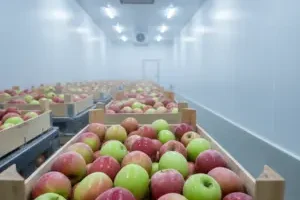
Apple Cold Storage Apple cold storage is one of the most effective methods for properly storing apples after harvest. By precisely controlling temperature, humidity, and when necessary, atmospheric composition, it prevents quality loss, shriveling, mold growth, and weight reduction. Apples are stored in above-zero temperature ranges (typically 0 to 4°C) with controlled relative humidity to slow down respiration and ripening, allowing for extended storage and off-season market supply.Atlas Refrigeration Co. designs and constructs apple cold storage facilities fully customized to the apple variety, required capacity, and operational conditions. For detailed information, a transparent quotation, and free consultation, simply contact our experts.Who Benefits Most from Apple Cold Storage?Apple growers and producersIf you have a high harvest volume and plan to sell during peak market prices, apple cold storage allows you to maintain product quality and avoid forced sales during harvest season.Cold storage operators and agricultural investorsApple cold storage is considered a low-risk and profitable investment, as apples are among the most consumed fruits in both domestic and export markets, with demand for storage throughout most of the year.Sorting, packaging, and export unitsFor facilities involved in sorting, packaging, or exporting apples, precise control of temperature and humidity is critical, as appearance, weight, and fruit health directly affect final pricing.Apple processing industriesJuice, concentrate, compote, and other apple-processing factories rely on apple cold storage to ensure stable raw material supply and consistent product quality.Technical Conditions and Standard Temperature for Apple Cold StorageTo preserve appearance, texture, flavor, and weight during storage, apple cold storage must be designed based on precise and controllable technical parameters. The most important factors include temperature, relative humidity, and air circulation:Storage temperature: Apple cold storage is designed as an above-zero facility, typically operating between 0 and 4°C. This range slows respiration while preventing freezing damage.Relative humidity: The ideal humidity level is between 90% and 95%. Lower humidity causes moisture loss, shriveling, and weight reduction, while humidity above 95% may promote mold growth.Air circulation: Uniform airflow ensures consistent temperature and humidity throughout the storage area and prevents accumulation of respiration gases.Apple Cold Storage Specifications TableThe specifications of apple cold storage are summarized in the table below: Above-zero (0 to 4°C) Type of cold storage 0to4°C (adjustable based on apple variety) Standard temperature range 90%to95% Suitable relative humidity Uniform distribution to prevent gas accumulation Air circulation Conventional, industrial, containerized (mobile), controlled atmosphere (CA) Available types Growers, investors, sorting/export units, processing industries Main applications Types of Apple Cold StorageConventional Apple Cold Storage (Above Zero)The most common option, controlling only temperature and humidity. Suitable for short- to medium-term storage and gradual market supply. More economical in cost.Industrial Apple Cold StorageDesigned for high capacities and commercial operation. Ideal for large-scale growers, cold storage operators, and distribution centers.Containerized (Mobile) Apple Cold StoragePrefabricated and portable units suitable for small projects, orchards without permanent infrastructure, or temporary use. Lower capacity but faster installation.Controlled Atmosphere (CA) Apple Cold StorageIn addition to temperature and humidity, oxygen and carbon dioxide levels are controlled. This significantly slows respiration and extends storage duration by several months compared to conventional systems. Ideal for long-term storage and maximum quality preservation.Apple Cold Storage Price and Cost FactorsThe cost of constructing an apple cold storage facility depends on several technical and operational parameters and cannot be determined as a fixed figure without project evaluation. Pricing is calculated based on storage capacity (tonnage), type of system (conventional or controlled atmosphere), insulation materials, refrigeration equipment specifications, automation level, and installation location.In addition, climate conditions, electricity infrastructure, type of compressors and condensers, and optional features such as pre-cooling rooms or atmosphere control systems significantly influence the final investment cost.Therefore, accurate pricing requires a technical assessment and cooling load calculation to ensure both cost optimization and long-term operational efficiency.Stages of Apple Cold Storage Design and Construction1- Needs assessment: Determining capacity, storage duration, operational purpose, and site conditions.2- Cooling load calculation and equipment selection: Based on storage volume, product entry temperature, and climate.3- Technical design and layout planning: Including airflow path, equipment placement, electrical systems, and optional pre-cooling room (reducing apple temperature to about 10°C before storage).4- Insulation and structural preparation: Using sandwich panels and proper insulation to prevent energy loss.5- Installation and control system setup: Refrigeration equipment and environmental control systems are installed and calibrated.6- Testing and commissioning: Final performance testing of temperature, humidity, airflow, and system stability before handover.Why Choose Atlas Refrigeration Co.?Apple cold storage systems designed by Atlas Co. are engineered to maximize quality preservation and operator profitability. Each project is customized according to apple variety, storage duration, climate, and operational goals.Accurate cooling load calculations and proper equipment selection ensure uniform temperature and humidity while minimizing energy consumption and extending equipment lifespan. Standard insulation and stable control systems—along with optional CA technology—allow long-term storage with minimal weight and quality loss.The company provides a one-year warranty, operational training, and technical support to ensure reliable long-term performance.ConclusionApple cold storage is a critical infrastructure investment for maintaining quality, reducing waste, and increasing profitability in the apple supply chain. Controlled temperature and humidity prevent weight loss, shriveling, mold growth, and market value reduction while enabling strategic timing of product sales.Choosing a properly engineered and customized cold storage system significantly impacts product longevity and return on investment. Therefore, apple cold storage should be viewed as a long-term investment rather than merely a construction cost.
What Is a Pharmaceutical Cold Room and Why Do We Need It?A pharmaceutical cold room is a precisely temperature-controlled space designed for the safe storage of medicines, vaccines, and biological products. The main purpose of these systems is to preserve the active ingredients of drugs and prevent them from spoiling. In fact, the absence of a standard cold room can put the entire pharmaceutical supply chain at risk by compromising product quality and effectiveness.According to a report by Ubisense, more than 50% of vaccines worldwide are lost due to improper storage conditions — a statistic that clearly highlights the importance of maintaining correct temperature and humidity levels. Research by Maersk also shows that around 35% of medicines worldwide require a cold chain to remain effective.What Are the Benefits of Using a Pharmaceutical Cold Room?Using a pharmaceutical cold room plays a vital role in maintaining the integrity of the pharmaceutical cold chain. Key benefits include:Preserving the chemical and structural properties of medicines and preventing loss of efficacyPreventing changes in color, odor, or therapeutic effect caused by temperature fluctuationsMaintaining the stability of biological products such as vaccines and serumsControlling the growth of microorganisms and reducing the risk of cross-contaminationExtending the shelf life of medicines and reducing waste caused by spoilageEnsuring consistent quality and stability of medicines throughout the entire cold chain processTypes of Pharmaceutical Cold Rooms (by Temperature and Application)In the pharmaceutical industry, no product can be stored without carefully considering its temperature requirements. Biological and chemical compounds can lose their structure – and therefore their effectiveness – when exposed to excessive heat or cold.For this reason, designing and installing the right type of pharmaceutical cold room for each product is a critical part of the drug production and distribution process. These cold rooms are generally classified by temperature range, product type, and application, as outlined below.Refrigerated Pharmaceutical Cold Room (2–8 °C)This is the most common type of pharmaceutical cold room. It is used for storing vaccines, insulin, serums, biological products, and many general medicines.The 2–8 °C temperature range helps maintain the stability of active pharmaceutical ingredients and prevents the growth of microorganisms.Refrigerated pharmaceutical cold rooms are typically equipped with:Data loggers for continuous temperature recordingPrecision air circulation and ventilation systemsTemperature sensors and alarm systems to prevent fluctuationsLow-Temperature Pharmaceutical Cold Room (−18 to −40 °C or lower)Low-temperature pharmaceutical cold rooms are used for special products such as plasma, highly sensitive vaccines, pharmaceutical raw materials, and blood derivatives.These systems use industrial screw or reciprocating compressors and refrigerants such as R404A or R134a to maintain the internal temperature within the required standard range.Pharmaceutical Clean Room (Clean Room)A pharmaceutical clean room is a controlled environment with a very low concentration of airborne particles. It is used in the production, packaging, and quality control of sterile medicines.Key features typically include:Positive room pressureHEPA-filtered ventilation systemsAntibacterial, easy-to-clean floors and wall surfacesThese conditions help minimize contamination risks during critical pharmaceutical processes.Mobile Pharmaceutical Cold RoomFor the transport of vaccines, temperature-sensitive medicines, and laboratory samples, mobile pharmaceutical cold rooms are used.These systems are usually built as containers equipped with:Integrated refrigeration unitsAccurate temperature monitoring and control systemsThey ensure that the pharmaceutical cold chain is maintained throughout the entire transportation route. Mobile cold rooms are one of the most effective solutions for pharmaceutical exports and long-distance distribution.What Are the Applications of Pharmaceutical Cold Rooms?The use of pharmaceutical cold rooms is not limited to manufacturing plants; they are also critical in distribution centers, healthcare facilities, and many other parts of the supply chain.The main applications of pharmaceutical cold rooms include:Pharmaceutical and biotechnology plants:For storing raw materials, intermediates, semi-finished products, and vaccines at various stages of production.Central warehouses and pharmaceutical logistics hubs:To maintain standard temperature conditions while storing and preparing consignments for shipment to pharmacies and healthcare centers.Hospitals and medical centers:Using hospital pharmaceutical stores and cold rooms to keep serums, vaccines, and temperature-sensitive injectable drugs under controlled conditions.Chain and retail pharmacies:For storing temperature-sensitive medicines such as insulin and liquid antibiotics.Vaccine and serum distribution centers:Especially in national vaccination programs, where dedicated vaccine cold rooms with 24/7 monitoring systems are required to ensure cold chain integrity at all times.What Features Should a Standard Pharmaceutical Cold Room Have?Maintaining the quality of medicines is not just about keeping them “cold”. A whole set of technical, hygienic, and structural requirements must be met. A standard pharmaceutical cold room is designed in line with WHO, GMP, and national Ministry of Health guidelines to ensure that temperature, humidity, and ventilation are uniform and reliable throughout the entire storage area.Precise Temperature and Humidity Control (Temperature Stability)In a compliant pharmaceutical warehouse, temperature should be controlled with a maximum tolerance of ±0.5 °C, and relative humidity should be maintained within 45–60%.(Source)This stability prevents the degradation of active ingredients and inhibits the growth of microorganisms. Automated control systems and regular calibration of sensors are essential to ensure accurate performance.Proper Ventilation and Uniform AirflowVentilation in a pharmaceutical cold room must be designed to provide uniform air circulation in all areas of the space.This prevents the formation of hot or cold spots and keeps the storage temperature within the required standard range for all products, not just those near the cooling units.Robust Structure with Concrete Floor and Durable FlooringA solid structure with a concrete floor and non-slip, washable, chemical-resistant flooring is a key hygiene and safety requirement for pharmaceutical cold storage.Such construction makes cleaning easier, prevents moisture ingress, and helps inhibit mold and fungal growth.Safe Distance from Polluting Industries (Smoke and Dust)The location of a pharmaceutical cold room should be chosen away from sources of industrial pollution such as smoke, dust, or chemical vapors.This distance from environmental contaminants reduces the risk of harmful particles entering the warehouse and helps maintain hygienic storage conditions.Standard Racking and Pallet SystemsAccording to pharmaceutical storage standards, medicines must not be placed directly on the floor.Using metal shelving or durable pallets helps maintain proper airflow around the products and prevents moisture transfer to pharmaceutical packaging, thereby protecting both packaging integrity and product quality.Door and Openings Protected with Strip Curtains or Air Curtains (Pest Control)Doors, openings, and windows should be protected with PVC strip curtains, silicone curtains, or air curtains to prevent the entry of insects, birds, and other pests.This simple but critical measure plays a major role in keeping the environment clean and ensuring product safety.Continuous Monitoring with Data Loggers and Multiple SensorsTemperature and humidity in a pharmaceutical cold room must be monitored continuously and automatically.Data loggers and smart sensors are installed at several points throughout the cold room, and in the event of any deviation, they trigger audible alarms or send SMS/remote notifications so operators can react before product quality is compromised.Backup Refrigeration Circuit (Redundancy in Case of Failure)A standard pharmaceutical cold room must be equipped with a backup refrigeration circuit or redundant system.If the main compressor or primary system fails, the backup system automatically takes over to prevent a sudden rise in temperature and avoid costly product losses. This redundancy is essential for maintaining the integrity of the pharmaceutical cold chain.What Are the Storage Conditions for Medicines in a Pharmaceutical Cold Room?The table below summarizes the recommended storage conditions for some important groups of medicinal products: Description Storage Temperature (°C) Type of Medicine The most temperature-sensitive group of medicines, requiring continuous temperature monitoring. 2–8 Vaccines and insulin Must be stored at freezing temperatures to prevent protein degradation. Down to −40 Plasma and blood products Stability decreases when stored above this temperature range. 5–10 Antibiotics and eye drops Require a dry, well-ventilated environment. 15–25 Supplements and herbal medicines List of Equipment in a Pharmaceutical Cold RoomIn the design and construction of a standard pharmaceutical cold room, selecting high-quality, precise equipment is absolutely critical. Each component plays a key role in controlling temperature, humidity, and the stability of the cold chain.The main equipment used in pharmaceutical cold rooms includes:Pharmaceutical cold room compressor: Piston or screw type, using refrigerants such as R404A or R134a to ensure stable and precise cooling.Hygienic, corrosion-resistant condenser and evaporator: Designed for efficient heat exchange and contamination prevention, typically made of stainless steel with anti-corrosion coating.Pharmaceutical unit cooler: Ensures uniform distribution of cold air throughout the room, with specially designed fins and low-noise fans to maintain consistent temperature conditions.Sensors and data loggers (PLC control system): For continuous recording of temperature and humidity, and automatic alarms in case of any deviation from the standard range.Smart electrical control panel and remote monitoring: For precise management, adjustment, and supervision of system operation via digital and online control systems.Emergency power generator: Supplies power to critical equipment during power outages and prevents sudden temperature rise and product loss.Ventilation and air filtration system (HEPA filter): Purifies the air and prevents the entry of airborne particles and contaminants into the pharmaceutical storage area.Low-temperature and power-failure alarm system: Provides immediate notification to operators in case of cooling system malfunction or power cut, helping to avoid costly pharmaceutical losses.What Standards Must Be Followed When Building a Pharmaceutical Cold Room?Complying with pharmaceutical cold room standards ensures that medicines remain completely safe and maintain their quality throughout the cold chain. These standards consist of a set of international guidelines and national regulations that define how to design the facility, control temperature, ventilation and humidity, and select hygienic construction materials.International Standards for Pharmaceutical Cold RoomsAt the global level, organizations such as WHO, GMP, GDP, GSP, and the FDA have issued detailed guidelines for the construction and operation of pharmaceutical cold rooms.These guidelines cover:Precise temperature controlMaintaining appropriate relative humidityProper air conditioning and ventilation Prevention of cross-contaminationThe use of corrosion-resistant and anti-fungal materials, the design of positive pressure systems, and the installation of data loggers for continuous data recording are also among the fundamental requirements.Adhering to these rules ensures that the pharmaceutical cold chain is preserved during all stages of storage and transportation, minimizing the risk of product degradation.National Standards and Requirements in IranIn Iran, the construction of a standard pharmaceutical cold room must comply with the guidelines of the Ministry of Health and the Food and Drug Organization.These authorities not only supervise the design and construction process, but also place special emphasis on:The use of hygienic, easy-to-clean materialsAdequate ventilation and air qualityEffective contamination controlObtaining an operating license for a cold room depends on providing valid calibration reports, having a reliable data recording system, and implementing automatic temperature and humidity control.Together, these national requirements and international standards form a comprehensive framework for safeguarding medicine quality and ensuring the accurate and reliable performance of pharmaceutical cold storage facilities.Step-by-step stages of building a pharmaceutical cold roomIn the process of building a pharmaceutical cold room, every step must be carried out in accordance with international standards and the requirements of the Ministry of Health and the Food and Drug Organization, so that the pharmaceutical cold chain is maintained without error. If you care about quality and compliance with global standards, it is worth knowing that the company Atlas refrigeration, relying on its engineering experience and numerous pharmaceutical projects, follows this path with great precision and in line with the latest international standards.Assessing medicine volume and determining cold room capacityThe first step in designing a pharmaceutical cold room is an accurate assessment of the volume of medicines, the type of packaging and the required storage duration. This stage determines what capacity is needed for the project and which type of refrigeration system will provide the highest efficiency.Calculating refrigeration load and selecting the refrigerantIn this stage, engineers calculate the required refrigeration load by taking into account environmental conditions, heat losses and the type of products. Then a suitable refrigerant is selected, for example R404A for below-zero cold rooms or R134a for above-zero cold rooms, so that a balance is achieved between efficiency, temperature stability and energy consumption.Designing foundation, insulation and ventilation drawingsIn the third stage, technical drawings are prepared, including the structure, walls, ventilation system and piping routes. Precise insulation using polyurethane panels with a thickness of 10 to 15 centimeters helps prevent energy loss and fluctuations in internal temperature. The ventilation system must also be designed in such a way that uniform airflow is maintained throughout the entire space.Manufacturing, installation and commissioning of unitsAt this stage, the process of building the pharmaceutical cold room enters the execution phase. The main equipment, including the compressor, condenser, evaporator and smart electrical control panel, is installed and the refrigeration system is tested. The accuracy of installation and insulation of connections is especially important here, because even the smallest leakage can disrupt the performance of the system.Testing temperature and humidity performance under real conditionsBefore final handover, the cold room is subjected to precise tests of temperature, humidity and, where required, positive pressure. Data logger sensors are installed at different points to ensure that the temperature difference at no point exceeds the standard limit of ±0.5 °C.Final handover with technical documentation and operating trainingAt the end of the project, all drawings, calibration reports, test results and operating manuals are delivered to the client. The company Atlas refrigeration not only delivers the cold room, but also provides full training for operators to ensure proper medicine storage and stable long-term performance of the system.Services of Atlas refrigeration Co. for pharmaceutical cold roomsAtlas refrigeration has gained over 30 years of experience in the design and implementation of refrigeration systems and is therefore considered one of the pioneers in the construction of pharmaceutical cold rooms in Iran.The main services of Atlas refrigeration Co. in the field of pharmaceutical cold rooms include:Tailor-made design based on the type of medicine and project capacityConstruction of above-zero and below-zero pharmaceutical cold rooms with smart control systemsInstallation, commissioning and full performance testing of temperature and humidity in pharmaceutical cold roomsOne-year cold room warranty and 15 years of after-sales serviceTraining of the operation team for correct use and maintenance of the systemHow much does it cost to build a pharmaceutical cold room?The cost of a pharmaceutical cold room depends on a variety of factors and cannot be defined as a fixed amount. Required capacity and temperature, type of refrigerant, equipment brand, level of automation, panel material and the thickness/quality of insulation are all key elements that determine the overall cost of building a pharmaceutical cold room. The use of smart systems for data logging, SMS alarms and remote control can also influence the final price.For an accurate estimate, the project details must be reviewed by technical experts so that the cost of the pharmaceutical cold room can be calculated and quoted specifically for your project.Purchasing a pharmaceutical cold room and order conditionsThe process of purchasing a pharmaceutical cold room from Atlas refrigeration is fully engineered and carried out step by step, so that the technical and hygienic requirements of each project are covered with precision. The ordering stages usually include initial technical consultation, customized design, submission of a proforma invoice, manufacturing, installation and final handover.Customers can submit their requests or ask for a price quotation for a pharmaceutical cold room either through the online order form on the website or by direct contact with the technical experts. Depending on the capacity and type of project, the delivery time varies between 15 and 120 days.This transparent approach has led to Atlas refrigeration Co. being recognized as one of the reputable brands in the field of pharmaceutical cold room orders.Final remarksThe pharmaceutical industry is inconceivable without standard pharmaceutical cold rooms. Maintaining the pharmaceutical cold chain not only guarantees the effectiveness of medicines, but also has a direct impact on patient health. Atlas refrigeration, with extensive experience in the design, calculation, construction and execution of pharmaceutical projects, is ready to provide free specialist consulting to manufacturers, hospitals and pharmaceutical distribution centers.To receive a tailored proforma invoice or technical consultation, you can contact the experts at Atlas refrigeration and benefit from the latest solutions for the design of pharmaceutical cold storage facilities.
Table of Content: Nut & Dried Fruit Cold StorageWhat Are the Benefits of Nut & Dried Fruit Cold Storage?Optimal Temperature and Humidity for Storing Nuts and Dried FruitsTypes of Nuts and Dried-Fruit Cold Storage by Product and StructureTechnical Features and Specifications of Nut & Dried-Fruit Cold StorageStep-by-Step Design Process for a Dried-Fruit Cold RoomExecution Stages for a Nut & Dried-Fruit Cold Room (Installation, Testing, Commissioning)Periodic Service for Nut & Dried-Fruit Cold RoomsHow Much Does a Nut & Dried-Fruit Cold Room Cost?Purchasing a Nut & Dried-Fruit Cold RoomConclusionNut & Dried Fruit Cold StorageA nut or dried-fruit cold room is an enclosure with precise control of temperature, humidity, and gentle ventilation, designed for storing products such as pistachios, almonds, walnuts, and more. The purpose of this cold storage is to prevent fat oxidation and mold growth. Typically, these systems operate within a temperature range of 0 to 10 °C and a relative humidity of 55% to 70% . At Atlas Refrigeration Co., nut cold stores are engineered to international standards to preserve the products’ natural quality and flavor while extending shelf life and export value. Below, you’ll find the technical design details, key advantages, and the factors that influence pricing and the selection of a nut cold store.What Are the Benefits of Nut & Dried Fruit Cold Storage?According to the International Nut & Dried Fruit Council (INC), the nut and dried-fruit market has surpassed 47 billion USD in recent years. While this figure is highly attractive to producers, what gets less attention is that 20% to 30% of nuts and dried fruits are lost to spoilage and mold due to improper temperature and humidity during storage. This is precisely where nut and dried-fruit cold rooms become critical.Many producers and exporters consider cooling to be one of the main advantages of a nut cold store. However, the primary purpose is to keep fresh nuts at the right temperature and to control the humidity for dried fruits—preventing fat oxidation, inhibiting mold growth, and preserving export value. When these conditions are properly maintained, the result is lower waste, consistent flavor and aroma, and longer shelf life.Reasons for the Importance of Cold Storage for Nuts and Dried FruitsPreserves freshness and sensory profile: Storing nuts and dried fruits in a purpose-built cold room keeps aromatic compounds and healthy oils in the kernels stable—i.e., truly keeping nuts fresh.Prevents mold and aflatoxin: A cool, controlled environment limits problematic fungal activity; humidity control for dried fruits, alongside gentle ventilation, reduces the risk of contamination.Stabilizes weight and appearance: Targeted humidity prevents wrinkling in raisins, figs, and dates, and maintains uniform color.Extends shelf life and export value: When products are kept to standard in a nut & dried-fruit cold store, their useful life increases.Improves return on investment: Higher quality drives higher sales and faster payback.According to a study at the Agricultural University of Athens “Dried kernels produced after short term cold storageof fresh nuts (10–20 days) showed, on average, a 35%–40% increase in total phenolic (TP) levels compared with conventionally dried kernels without the initial cold step.”Optimal Temperature and Humidity for Storing Nuts and Dried FruitsIn designing any nut and dried-fruit cold store, two factors determine the final product quality more than anything else: the storage temperature for nuts and the appropriate humidity for dried fruits. These two small variables have the greatest impact on flavor, aroma, color, and even the product’s export value.In the table below—based on standards from the U.S. Department of Agriculture (USDA)—we’ve listed the best temperature and humidity conditions for storing various nuts and dried fruits:Relative Humidity (%)Temperature (°C)Product65-750-10Pistachio65-750-10Almond65-750-10Walnut60-700-10Hazelnut70-750-5Date55-650-4Barberry55-700-5Mixed nutsTypes of Nuts and Dried-Fruit Cold Storage by Product and StructureIn designing storage systems for nuts and dried fruits, correctly identifying the “cold-room type” is a key technical step. Below we review the main types along with their important features.Classification by ProductIf we categorize by product, nut and dried-fruit cold rooms fall into the following groups:Cold storage for nuts: For oil-rich kernels such as pistachios, almonds, walnuts, hazelnuts, seeds, peanuts, and cashews, an above-zero nut cold room is recommended—i.e., a temperature range that is cold but not below freezing (about 0 to 5 °C) so the natural fats are not damaged.Cold storage for dried fruits: For raisins, currants, dates, dried figs, barberries, and saffron, humidity control and gentle ventilation are the primary concerns; appropriate humidity is typically more critical. Research has shown that storing dried fruits at much lower temperatures (e.g., +1 °C) can increase antioxidant compounds.Classification by Physical StructureCold rooms may differ in insulation, steady airflow, precise temperature and humidity control, and size/capacity suited to the product. In general, nut and dried-fruit cold rooms can be grouped as follows:Fixed cold room: Permanent installation with high capacity, full insulation, and precise temperature and humidity control. Suitable for factories and central warehouses, offering high energy efficiency and thermal stability.Portable or modular cold room: A modular, relocatable structure with quick installation and lower initial investment. Suitable for temporary projects and distribution centers, enabling easy expansion and relocation.Technical Features and Specifications of Nut & Dried-Fruit Cold StorageWhen it comes to storing nuts and dried fruits, no detail in the technical design is trivial. Even minor errors in insulation or ventilation can lead to quality loss, mold growth, or even the loss of the product’s export value. Therefore, a precise understanding of the technical specifications of a nut cold room is essential for proper design and execution.Temperature and Humidity RangeDedicated nut and dried-fruit cold rooms must maintain temperature within 0 to 10 °C with a maximum fluctuation of ±0.5 °C. This range offers the best balance between suppressing microbial activity and preserving the nuts’ natural fats.Relative humidity (RH) is typically set around 55% up to a maximum of 70% to prevent excessive drying or moisture uptake. Digital sensors connected to a data logger are essential for real-time recording and control of both parameters.Insulation and Enclosure MaterialsIn dried-fruit cold rooms, polyurethane (PU) panels with a minimum thickness of 10 cm are used. This material has a very low thermal conductivity (about 0.024 W/m·K), minimizing energy loss.The floor, walls, and ceiling must be fully washable, mold-resistant, and moisture-resistant. Interior cladding is commonly made of galvanized sheet or polished stainless steel to prevent dirt and mold from adhering to surfaces.Airflow SystemOne of the most important technical aspects is uniform temperature distribution. If airflow is not properly designed, warmer zones can form in corners or behind pallets, creating favorable conditions for mold.To avoid this, engineers use energy-efficient axial fans and supply ducts with balanced airflow rates. In some models, the ventilation system is combined with a CO₂ sensor to prevent the buildup of gases released by product respiration.Ventilation, Filtration, and Odor ControlDried fruits such as raisins, barberries, and dates readily absorb odors in enclosed spaces; therefore, an exhaust fan and an activated-carbon filter in the ventilation path help prevent stale smells and odor transfer.Additionally, the exhaust design should maintain a slightly positive internal pressure so that contaminated outside air does not enter.Step-by-Step Design Process for a Dried-Fruit Cold RoomIn designing and building nut and dried-fruit cold storage, the main goal is to create a stable environment in which the product not only stays cool but also preserves its natural compounds, color, and aroma for months. Sound engineering and design mean harmonizing heat transfer, humidity control, ventilation, and food hygiene.Step 1: Capacity and Heat-Load CalculationThe first step is to calculate the cold room’s capacity. Based on product weight (kg or tons), storage duration (days/months), product condition at entry (fresh or dried), and the number of pallets, the designer must estimate the total heat load.Step 2: Selecting the RefrigerantSmaller cold rooms typically use fluorinated (HFC) refrigerants such as R22, R-134a, or R-404A, which offer high efficiency and finer control. For larger industrial projects, ammonia (NH₃) remains the best option because it is environmentally compatible and has a high coefficient of performance (COP).Research has shown that ammonia refrigeration systems are highly energy-efficient and in many cases outperform systems using synthetic (fluorinated) refrigerants.Step 3: Temperature and Humidity Control System DesignA dried-fruit cold room should include two independent control loops:Temperature control (with PT100 sensors and a digital thermostat)Humidity control (with a humidistat plus an industrial dehumidifier or a water-steam humidifier)The objective is to keep internal temperature and relative humidity within standard ranges.Step 4: Equipment Layout and AirflowInside a nut cold room, the placement of the condenser, evaporator, fans, and return-air path must be arranged so that airflow passes gently through the racks and reaches all areas.Step 5: Custom Design and Implementation ExperienceMajor engineering firms—such as Atlas Co., with over three decades of experience in designing and executing ammonia and HFC cold rooms—typically use a modular design for nut and dried-fruit projects so each section of the facility can have separate temperature and humidity control tailored to the product (e.g., pistachio kernels or dates).This type of customized design not only reduces energy consumption but also maximizes quality retention—especially for dried-fruit exporters, for whom consistent quality is synonymous with preserving export markets.Another standout feature of Atlas Co. is the use of advanced equipment from renowned brands, including various ammonia and HFC screw compressors from manufacturers such as Bitzer, Copeland, and others.Execution Stages for a Nut & Dried-Fruit Cold Room (Installation, Testing, Commissioning)In industrial projects involving sensitive foods, a cold room’s success depends not only on sound design but also on precise execution and step-by-step testing, which ultimately determines final quality. At Atlas Refrigeration Co., the installation process for a nut cold room includes structural assembly, refrigeration system implementation, control wiring, and meticulous insulation—performed under the supervision of a refrigeration commissioning engineer.1) Installing the Structure and InsulationIn the first stage, 10-cm polyurethane (PU) panels are installed according to the layout drawings. All joints between panels must be fully sealed to prevent air and water-vapor ingress, since even minor moisture intrusion can cause frost formation, higher energy consumption, and reduced refrigeration efficiency.2) Installing the Refrigeration EquipmentAfter the structure is in place, the main equipment—compressor, condenser, evaporator, and refrigerant piping—is installed. For large nut cold rooms, an ammonia screw compressor is recommended because, compared with HFC systems, it provides greater stability at part load and reduces temperature fluctuations.For smaller projects (retail or containerized units), HFC compressor systems using refrigerants such as R404A or R407C are common due to easier installation and lower cost.3) Testing the Dried-Fruit Cold RoomNext comes the testing phase, which includes several key checks:Refrigerant leak test: Using dry nitrogen under pressure (about 250 psi)Compressor and expansion valve performance testTemperature fluctuation test: With fans running and a simulated load, to ensure the room air temperature remains stable within 0 to 5 °CCalibration of temperature and humidity sensors using a data logger4) Commissioning the Cold RoomAfter the tests are approved, commissioning begins. This includes step-by-step cooling, gradually bringing the room temperature down from ambient (25 °C) to the target (e.g., 4 °C).A sudden temperature drop can cause surface condensation on walls or products, which is particularly risky for dried fruits.5) Data Recording and Operator TrainingFinally, the operating team must be trained on temperature and humidity setpoints, alarm management, data recording, and periodic equipment servicing. Experience shows that proper operator training plays a crucial role in extending equipment life and maintaining product quality.Periodic Service for Nut & Dried-Fruit Cold RoomsPerforming regular preventive maintenance—including checking compressor pressure and oil level, cleaning coils, and testing for refrigerant leaks—improves energy efficiency and helps prevent sudden swings in temperature and humidity. Installing a data logger for real-time temperature and humidity recording is not only essential for quality control but is also required for obtaining export permits. Careful monitoring of these records helps keep nut and dried-fruit quality within standard ranges.Reputable manufacturers such as Atlas Co. not only design and install systems, but also back long-term performance with a one-year cold-room warranty and after-sales service for up to 15 years. These services include seasonal inspections, leak remediation, sensor calibration, and operator training to ensure the cold room always runs at optimum conditions. In practice, a well-executed maintenance plan and consistent warranty support safeguard product quality, shelf life, and economic value across the supply chain.How Much Does a Nut & Dried-Fruit Cold Room Cost?The cost of a nut and dried-fruit cold room depends on factors such as storage capacity, refrigerant type, insulation materials, control equipment, and installation location.On average, a dried-fruit cold room with 5-ton and 500-ton capacities—depending on the design and equipment brands—typically costs about USD 5,000 and about USD 70,000, respectively. These figures are indicative only; an individual project may price higher or lower due to design approach and system type, insulation thickness, refrigeration equipment brand, and stability/control systems. In all cases, an accurate estimate is only possible after collecting the initial technical data and performing a heat-load calculation.Purchasing a Nut & Dried-Fruit Cold RoomBefore buying a nut cold room, you should evaluate the product type, capacity, inventory turnover, and the local climate at the installation site. A cold room designed for pistachios is not necessarily suitable for dates or raisins, since these products require different humidity levels. When requesting quotes, pay close attention to the compressor brand, refrigerant type, and after-sales support.Atlas Co., offers customized designs and precise heat-load calculations, enabling you to order a cold room tailored to your business needs. You can fill out the consultation form to receive a detailed pro forma quotation and benefit from free technical advice from our engineering team.For pricing inquiries and a free consultation, contact our specialists today.ConclusionIn the highly competitive nuts and dried-fruits market, building a nut cold room is not just a technical investment—it’s a tool for protecting brand value and ensuring export quality. Designing a dried-fruit cold store with careful attention to temperature, humidity, ventilation, and refrigerant selection helps producers deliver products that are fresh, safe, and compliant with international standards.What is the right temperature for storing nuts?Typically 0 to 5 °C, which helps prevent fat oxidation and rancidity.How do we prevent pest or mold issues in storage?Does a nut cold room need a humidity controller?How is a nut cold room different from a general food cold room?How long can nuts be stored?
Why do we need Flower & plant cold rooms?Within the supply chain for flowers and plants, the use of dedicated cold storage is critically important. From the moment flowers are cut and prepared for shipment to florists until they reach the buyer, they must be kept in a cool, controlled environment above 0 °C with appropriate humidity. Otherwise, due to biological processes (such as the breakdown of sugars and starches in plant tissues to produce water, carbon dioxide, and energy), they wilt quickly and their vase life is shortened. That said, each type of plant must be stored under its own specific conditions.Types of Flower and Plant Cold StorageAn important point is that by using above-freezing cold rooms, we can prevent—or at least delay—wilting and microbial spoilage in plants. Today, various types of cold rooms are designed and built, which are generally classified into above-zero cold rooms and sub-zero cold rooms.Above-zero flower cold roomThe appropriate temperature for flower cold storage is typically above 0 °C; therefore, above-freezing flower cold rooms are used for storing most flowers and plants. These facilities provide temperatures between 0 and 4 °C (near freezing). Of course, each type of flower and plant requires specific temperature and humidity conditions, but in general, this temperature range is suitable for most of them, as well as for many fruits, vegetables, and other plant materials.At the same time, humidity and ventilation (air circulation) in above-freezing cold rooms must be fully controlled. For example, the best relative humidity range for storing flowers is 90–95%. For some plants, such as herbaceous plants, an RH of 80–85% is appropriate. Certain flowers may also require particular humidity levels—for instance, tulips should be held at a relative humidity of 70–75%, and some tropical flowers are best stored at around 10 °C with 60–85% RH.One category of plants with significant commercial importance is cut flowers. Storage conditions for cut flowers differ somewhat from those of other flowers and plants; for example, the storage temperature for cut flowers is typically set between 0 and 2 °C. The cold room’s relative humidity (RH) should also be maintained at approximately 90%.In constructing cold storage for cut flowers, it is essential to create conditions that prevent the production and release of ethylene gas, as the emission of this gas by flowers (due to unfavorable environmental conditions)can accelerate the degradation of floral and plant tissues.If proper conditions are provided,flowers can remain fresh for up to one month. Special conditions Relative humidity (%) Suitable temperature (°C) Type of flower or plant Prevention of ethylene gas release 90 0-2 Cut branch flowers Higher temperature to prevent chilling injury 60-85 10-13 Tropical flowers (Anthurium, Orchid, Bird of Paradise) Adequate ventilation to prevent decay 80-85 0-4 Herbaceous plants Precise humidity control to prevent mold growth 85-95 0-4 Chilling-sensitive fruits and vegetables Sub-zero flower cold roomAs a rule, a sub-zero cold room is not used for storing flowers and plants, because the recommended storage temperatures for most flowers and plants are above 0 °C. The environment still needs to be cool; therefore, the cold room is controlled at temperatures close to 0 °C.Advantages of Flower and Plant Cold RoomsThe benefits of storing flowers in a cold room include the following:Slowing the biological processes in plants and flowers.Preventing moisture loss and wilting in plants and flowers.Reducing ethylene production by keeping the cold room cool.Extending the lifespan of plants and flowers—especially cut flowers, which are of significant financial importance.Providing adequate windows for the export and transport of flowers and plants.Enabling increased flower production and revenue generation through export.How to Store Flowers and Plants in a Cold RoomTo store flowers and plants in a cold room, you must consider factors such as temperature, humidity, ventilation and air circulation, as well as light levels. Temperature and humidity conditions were discussed in the previous section; however, to achieve appropriate humidity, standard equipment such as misters, etc., should be used.In addition, to ensure proper ventilation, the air-supply systems must be designed so that they establish effective airflow throughout the cold room. Moreover, to make sure the air reaches all parts of the cold room and all flowers, the flowers should be placed at suitable distances from one another (and also at a proper distance from the walls) and should not be stacked.The light level in the flower cold room must also be controlled so that it does not cause wilting and premature aging. One factor that leads to this is excessive light; therefore, in a flower cold room—especially for cut flowers—we should aim to provide the lowest feasible level of illumination.In general, two methods are used to store cut flowers: dry and wet. In the dry method, the flowers are kept in plastic (nylon) bags so they do not lose moisture. In the wet method, the flowers are placed in water.Storing Flowers and Plants in a Cold Room for ExportStoring flowers and plants for export requires special conditions, because these products have high commercial value. If you plan to export flowers and plants, you must first consider issues such as the destination country’s sanitary and phytosanitary standards, as each country may have its own specific requirements for flower handling and storage. Phytosanitary conditions are, in essence, standardized measures for protecting plants against pests and harmful agents. In addition, you must ensure appropriate temperature and humidity conditions. All of these factors—together with proper packaging (for example, fiberboard and wooden boxes that are larger than the dimensions of the flowers)—help ensure that the flowers are exported without damage and at the highest level of quality.Design and Construction of Cut-Flower Cold RoomsIn designing and constructing flower cold rooms, the appropriate storage conditions for flowers and plants must be carefully considered. Moreover, since each type of flower and plant must be kept in a cold room under specific conditions—and we cannot store all types of flowers, especially cut flowers, in a single cold-room model—cut-flower cold rooms are generally smaller in size. In general, the following steps are followed to set up a flower and plant cold room.Request and Order for Cold Room ConstructionAt the first stage, you can obtain free, specialized consultation from the technical experts at Broudat Kar Atlas to order a cold room tailored to your needs. During this stage, a precise needs assessment is carried out in accordance with your business conditions. After that, you can submit an order to construct the cold room based on the capacity of the flowers.Cooling Load CalculationThe cold room’s cooling load must be calculated with precision to prevent unnecessary costs and energy waste. At this stage, Broudat Kar Atlas specialists determine the required cooling load according to the flower types, storage tonnage, and environmental conditions.Selection of Appropriate EquipmentOne of the key steps in building and commissioning a flower cold room is using modern equipment from reputable brands. Among the most important equipment are the compressor, evaporator, humidification systems such as misters, and the electrical and air-circulation systems.Technical Proposal and Budget ReviewAfter the appropriate equipment has been identified, a technical proposal—based on your budget and an itemized list of foreseeable costs—will be presented. You can then make decisions in line with your budget.Site VisitAt this stage, the installation site for the cold room is inspected. This is done to evaluate the physical conditions, cold-room dimensions, and available utilities so the system can be implemented more effectively and optimally.Contract SigningHere, a contract is concluded between you and the Broudat Kar Atlas team. The contract will specify all project details, the construction process, the budget, and the project completion timeline.Cold Room Installation and Standard ExecutionFollowing the contract, the installation and execution of the cold room begin. During this phase, the appropriate equipment is procured and installed.Warranty and SupportAfter installing the flower and plant cold room, Broudat Kar Atlas provides after-sales service and technical support. In addition, all of the company’s equipment carries a one-year warranty.Price of Cut-Flower Cold RoomsThe price of flower and plant cold rooms depends on various factors; one of these is the required tonnage and capacity. In addition, the cold room’s dimensions, the type of equipment used, and so on also affect the total cost and price. To estimate costs and pricing for a cold room, you can refer here.Purchasing Flower & Plant Cold RoomsWhen purchasing a cold room for cut flowers and other flower/plant applications, you should consider the manufacturer’s profile and level of experience. Failure to follow standards by some companies ultimately leads to extra costs and damage to the flowers. In addition, before buying a flower/plant cold room, it is advisable to review the unit’s features and the appropriate standards for flower storage.Broudat Kar Atlas Services for Flower & Plant Cold RoomsAs one of the leading producers of various flower and plant cold rooms in Iran, Broudat Kar Atlas uses state-of-the-art, advanced equipment for construction—such as top-tier compressors (well-known brands like Danfoss, Bitzer, etc.), sandwich panels, XPS insulation, and more. All equipment provided by the company carries a one-year warranty, and you can benefit from ongoing support after purchase as well.Why Broudat Kar Atlas?Fully competitive, reasonable pricingExperienced technical team and professional supportProper installation and commissioning in line with current standardsUse of reputable brandsFast installation and executionFinal Word on Cut-Flower Cold RoomsIn the end, it can be said that building a cold room for cut flowers—and for other types of plants—requires close attention to key standards. Otherwise, storage will not only fail to extend the lifespan of the flowers, it can actually accelerate deterioration. If you are looking to purchase a suitable greenhouse/flower cold room, you can take advantage of Broudat Kar Atlas’s free consultation starting now. To get started, contact our specialists through the communication channels listed on the website.
Onion cold storageOnion cold storage is regarded as the best method for the long-term preservation of this product. In the past, using traditional methods such as drying the onions and storing them in a basement or dark warehouse, the onions could be kept for a short period after harvest; however, these methods ultimately resulted in the spoilage of 40–80 percent of the onions.At present, by using onion cold storage, this product can be kept intact for up to 9 months; however, due to onions’ high sensitivity to improper humidity and temperature, they are among the highest-risk products for long-term storage. For this reason, strict attention must be paid to the standards for the design and implementation of onion cold storage facilities.Types of Onion Cold StorageThe temperature and humidity of an onion cold storage vary depending on the onion type; therefore, each type of onion requires a cold room with different conditions. For example, green onions, sweet onions, and others must each be stored in a cold room suited to their specific standards. Below, we examine the types of onion cold storage based on their functions.Onion Processing and Preparation Cold StorageOne type of onion cold storage is the onion processing cold room. Since onions cannot be placed in cold storage immediately after harvest, they must be processed or prepared before entering the cold room; this work is carried out in the processing cold room.In this facility, onions are dried for several days (under ideal conditions with proper ventilation, surface drying typically takes 7 to 10 days) to prepare them for long-term storage in the cold room. For this purpose, the onions should not be cooled rapidly; rather, their temperature should be reduced gradually—by up to 0.5 °C per day—until it reaches the standard storage temperature in the cold room.It is worth noting that ventilation plays a very important role in onion storage; therefore, appropriate equipment for air circulation must be used in the cold room. After storage, onions are not shipped directly from the cold room to market; instead, they are warmed under controlled conditions to prevent moisture condensation.Onion Storage Cold RoomAfter the onions have been processed, they are stored in a cold room. In this type of facility, specific temperature and humidity conditions are set according to the onion variety. For example, dry, pungent onions should be kept at 0 °C with 65–75% relative humidity. The storage conditions in these cold rooms are adjusted in such a way as to prevent sprouting, decay, and discoloration.Advantages of Onion Cold StorageWhat are the advantages of using onion cold storage for producers?Extended storage life: Dry, pungent onions can be stored for up to 9 months and mild onions for up to 3 months without loss of quality.Prevention of sprouting and rooting: Processing or pre-cooling and storing at the proper temperature prevents onions from sprouting.Preservation of quality and freshness: Controlled humidity and temperature prevent yellowing and decay and also curb weight loss.Reduced waste and product loss: Storing onions in cold rooms reduces waste.Ability to supply during shortage seasons: Storing onions at harvest and selling when prices rise can multiply profitability.Price stability in the market: Cold storage helps stabilize onion prices.Improved transportation and distribution: Onions kept in cold storage face a lower risk of spoilage and are shipped to various markets at the right time.High-quality export potential: Storage under optimal conditions ultimately preserves quality and increases export opportunities.Lower transportation costs: Locating cold storage near farms and markets reduces transport costs.Increased efficiency and reduced producer costs: By storing their product, onion producers/farmers can manage their income more effectively. How to Package Onions for Depot StorageOne of the key questions for onion producers is how to store onions. To stockpile or warehouse onions, special attention must be paid to storage practices—particularly the packaging method. There are several ways to package onions. One method is to use plastic mesh sacks. Owing to their structure, these sacks allow good airflow around the onions so they receive adequate cooling. Try to avoid piling onions on top of one another in the cold room; otherwise, the onions in the lower layers may rot quickly. It is also advisable to place the onion sacks on racks with proper spacing between them.Another method of packaging onions is to use plastic crates. However, if you intend to use these crates, they must be placed 3 to 4 centimeters apart. Using crates is suitable for cold rooms that do not have shelving.Storage Conditions for Onions in Cold StorageThe storage temperature and humidity for onions in cold rooms depend on factors such as the onion variety. In the table below, the conditions for industrial onion cold storage are provided according to onion type. Additional details Storage Duration Relative humidity (%) Temperature (°C) Types of onions In polyethylene-covered containers, quality is maintained for one month Temperatures above 5°C cause yellowing and rot 3-4 weeks 95-98 0 Green onions (bunched) High temperatures cause sprouting. Also, high humidity accelerates rooting 6-9 months 65-75 0 Dry onion (spicy) They are stored in regular warehouses with circulating air or in refrigerated cold rooms 1-3 months 70-75 0-5 Mild or sweet onion Note: One of the most critical conditions for storing onions in all types of cold rooms is proper ventilation and fresh-air circulation. Typically, if adequate ventilation is lacking, onions release ethylene gas. The removal of this gas from the onions accelerates their sprouting; therefore, fresh air should flow effectively throughout all areas of the cold room.Onion Cold Storage EquipmentTo build an onion cold room—especially an onion cold room intended for export—high-quality, appropriate equipment must be used. For example, a standard cold room requires equipment such as a compressor, condenser, evaporator, expansion valve, air-circulation and ventilation components like fan coils and dampers, as well as lighting and control equipment such as an electrical control panel, and temperature and humidity controllers, and so on.Construction of an Onion Cold RoomIn this section, we will review—step by step—the stages of building an onion cold room.Study and AssessmentAt this stage, the project requirements must be defined precisely. This includes determining the volume and capacity of the cold store based on the quantity of onions produced or imported, reviewing the allocated budget, selecting a suitable site for construction with regard to access, infrastructure, and climatic conditions, and becoming familiar with the regulations and standards governing onion cold-store construction. Thorough and comprehensive preliminary studies form the foundation for the project’s success.DesignAfter the preliminary studies, the cold-store design begins. In this phase, technical drawings—including plan, section, and execution details—are prepared, along with the technical specifications for refrigeration, ventilation, and humidification equipment, and cost estimates for construction, equipment, and installation. Meticulous, engineering-driven design is crucial, as it determines the quality and performance of the cold store.Contractor SelectionChoosing the right contractor for project execution is a critical step. The contractor should have sufficient experience and a proven track record in building onion cold stores, as well as the necessary equipment and manpower. Reviewing the contractor’s credentials and ensuring the presence of specialized, experienced teams across relevant disciplines are essential actions at this stage.PermittingTo construct an onion cold store, the necessary permits must be obtained from the competent authorities—such as the Ministry of Agriculture Jihad, the Ministry of Industry, Mine and Trade, the National Standard Organization, and other relevant bodies. These permits ensure compliance with applicable standards and regulations.Construction and ExecutionOnce permits are obtained, the project proceeds to construction and implementation. This stage includes building the structure (erecting the hall or cold-room chambers), thermal insulation, installing and commissioning the refrigeration, ventilation, and humidification systems, conducting the necessary tests to verify correct operation, and rectifying any deficiencies or faults in the cold-store systems. Maintenance and RepairsAfter the construction and commissioning of the cold store are completed, it must be maintained and serviced regularly to extend its useful life and prevent problems and breakdowns. Carrying out regular inspections, performing preventive maintenance, and observing safety precautions during cold-store maintenance and repairs are among the essential measures at this stage.Onion Cold Storage Construction CostThe cost of building an onion cold storage facility depends on several factors, including storage capacity (tonnage), dimensions of the cold room, the type and brand of equipment, as well as overall economic conditions and the exchange rate.However, you can reduce setup costs by taking advantage of Atlas Refrigeration’s free professional consultation servicesAt Atlas Refrigeration, we help you design and build a customized cold storage facility that meets your exact needs — at the best possible price and without unnecessary expenses. We are committed to using advanced technology and world-class brands in the installation and commissioning of all types of cold storage systems, whether small-scale or industrial.Purchasing an Onion Cold Storage SystemWhen purchasing an onion cold storage facility, it is important to consider several key parameters such as geographical location, available budget, manufacturer’s experience, storage capacity (tonnage), the ability to obtain necessary permits, and the required storage duration for the onions.In this regard, one of Atlas Refrigeration’s main services is providing expert consultation before purchase to help you make the best investment decision. In addition, all of our products and installations come with a warranty and comprehensive after-sales service.ConclusionIn conclusion, the importance of onion cold storage goes far beyond simply lowering the temperature. When the facility is properly designed and executed, its benefits are clearly reflected in reduced waste, outstanding efficiency, and a strong return on investment. If you are seeking to establish an onion cold store professionally and in accordance with best practices, Broudat Kar Atlas, as one of the pioneers of cold-store design in the country, is ready to provide you with specialized services. To get started and receive a free consultation, simply contact our experts through the communication channels listed on the website.
Potato Cold StoragePotatoes are among the most widely consumed and commercially important vegetables, and they can be stored for long periods under proper cold storage conditions. According to a 2021 report by the Food and Agriculture Organization (FAO), more than 370 million tons of potatoes were harvested worldwide — with Iran accounting for over 5 million tons of that total.However, due to improper and unscientific storage methods, nearly 20% of the harvested potatoes are lost to spoilage. Fortunately, this issue is being addressed in many countries — particularly in Iran — through the use of potato cold storage facilities.By maintaining standard storage conditions, a properly designed potato cold storage system can significantly reduce waste and extend the storage life of potatoes for up to 10 months without compromising quality.
(0/8)
Email Us
WhatsApp